Architecture, artistic collaboration and the enduring mystery of Mikhail Vrubel’s majolica panels
Rising above the heart of Moscow, the historic Metropol Hotel is more than an architectural landmark. Its richly decorated façade embodies the artistic ambitions of the Russian Art Nouveau movement at the turn of the twentieth century, bringing together architecture, monumental art and decorative craftsmanship. A recent study published in the HSE University Journal of Art & Design revisits the building’s history, challenging established assumptions about how its distinctive appearance evolved.
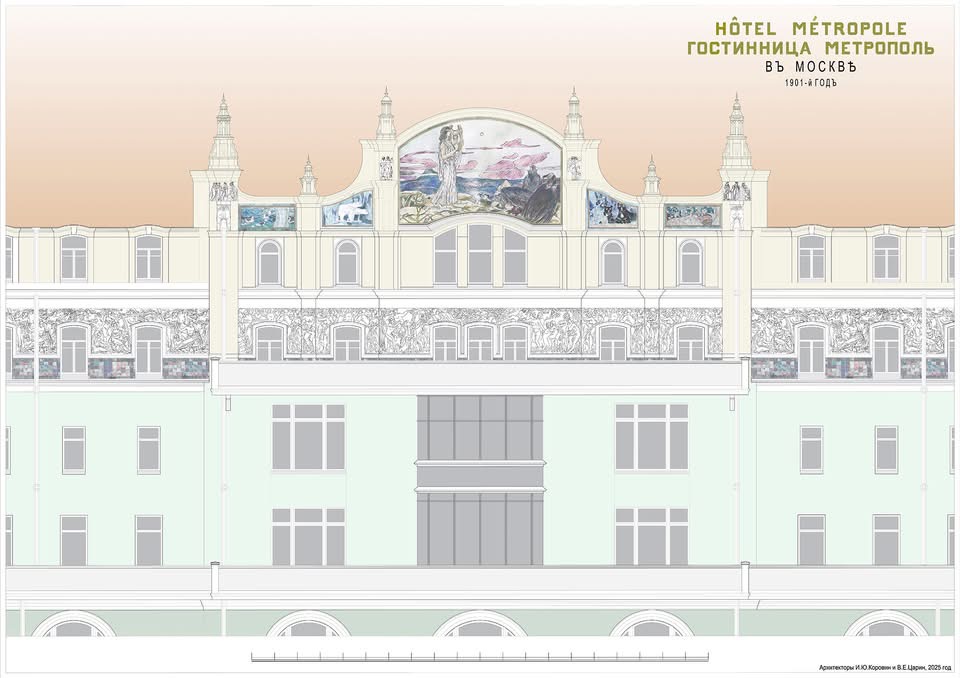
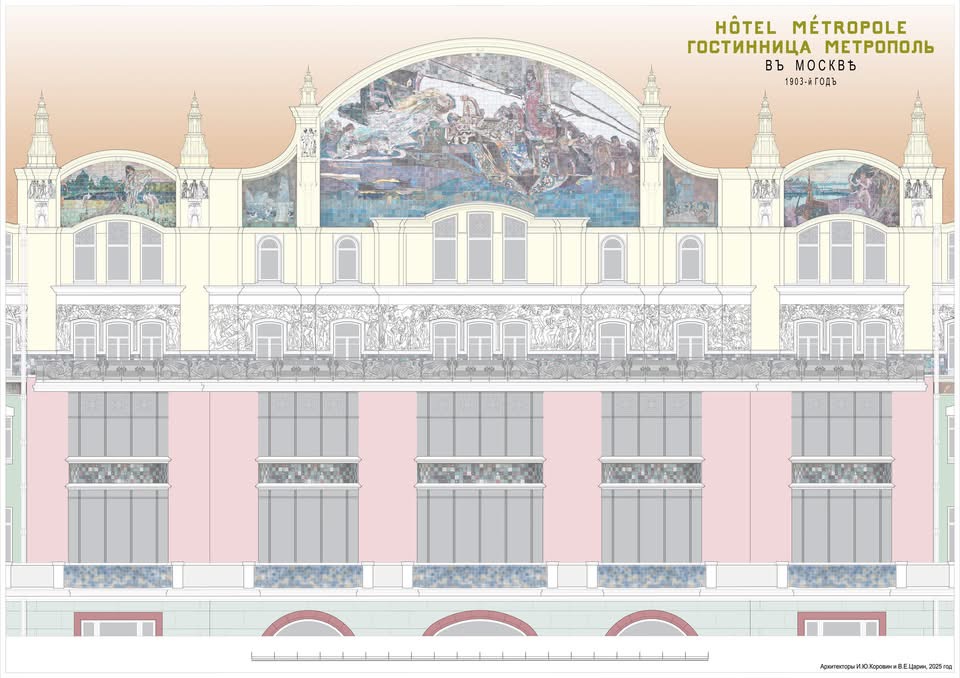
Graphic reconstruction of the façade along Teatralny Proyezd for 1901 and 1903. Architects I. Korovin and V. Tsarin.
In “Moscow Metropol: Another History,” authors Sergey Kavtaradze, Igor Korovin and Vitaly Tsarin examine archival documents and previously identified photographs of the building taken before the devastating fire of December 1901. Their research sheds new light on the successive stages of the hotel’s construction and the contributions of architects and artists associated with the project, including William Walcot, Lev Kekushev, Alexander Golovin and Mikhail Vrubel.
At the centre of the story is Vrubel’s celebrated majolica panel Princess of the Dream, inspired by Edmond Rostand’s play La Princesse lointaine. Its monumental presence has become one of the defining features of the Metropol’s façade and a remarkable example of the integration of fine art into architecture.
Yet the research raises further questions. The authors suggest that the decorative panels flanking Vrubel’s celebrated work may also have been created from his designs, although documentary evidence confirming this attribution has not been found. They also reconsider the original arrangement and identification of several panels associated with Alexander Golovin.
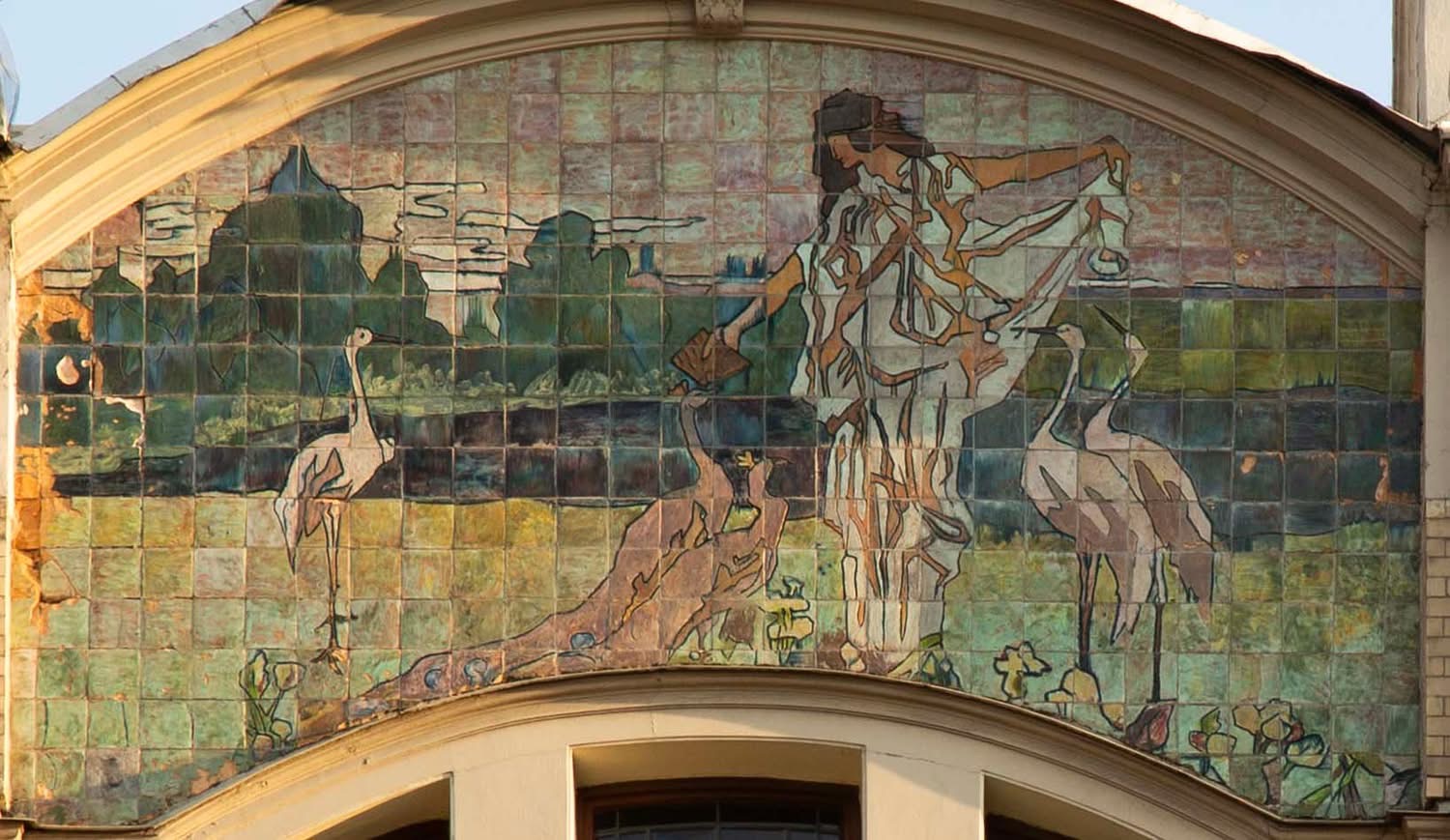
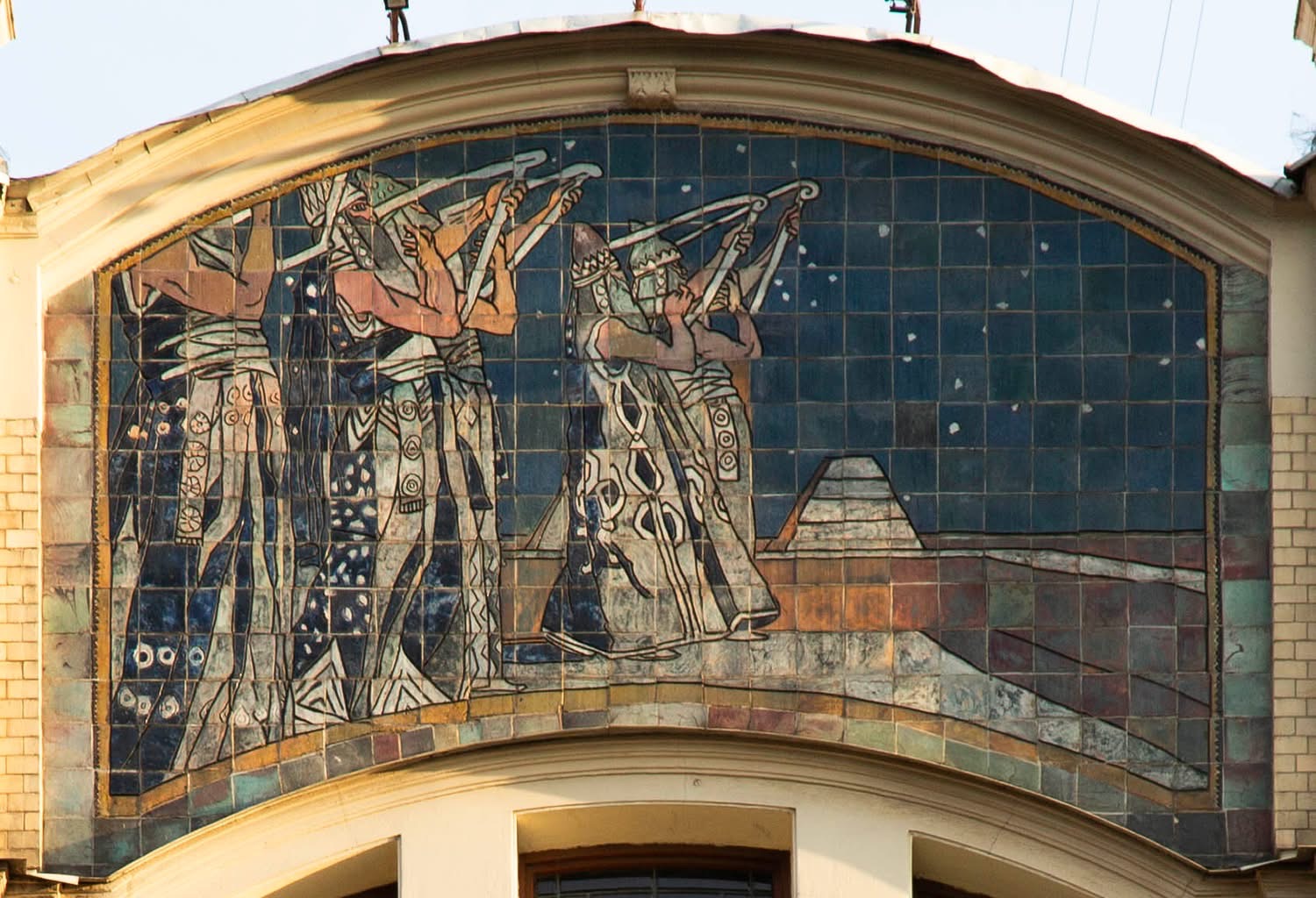
A. Vrubel (version): Figure with Herons and Peacocks. A. Golovin: Composition for the Opera “Judith,” set to music by A. N. Serov (version).
Rather than presenting the Metropol as the product of a single, unified architectural vision, the study reveals a more complex creative process shaped by changing designs, historical events and the collaboration of artists and architects. For those interested in the history of Russian modernism, the Metropol remains an extraordinary example of how a building can preserve not only an architectural style, but also the unresolved questions and artistic experiments of its era.
Source and further reading
Sergey Kavtaradze, Igor Korovin and Vitaly Tsarin, “Moscow Metropol: Another History,” HSE University Journal of Art & Design, No. 11 (3/2026), pp. 122–211. DOI: 10.17323/3034-2031-2026-11-122-211. Original article: https://art-journal.hse.ru/issue-3-2026/sergej-kavtaradze-igor-korovin-vitalij-carin-moskovskij-metropol-drugaya-istoriya
Copyright and attribution notice: This article is an original editorial summary prepared for Repostage Magazine based on the research cited above. The original research and its intellectual contributions remain the property of the respective authors and the HSE University Journal of Art & Design. The original publication is available in Open Access.